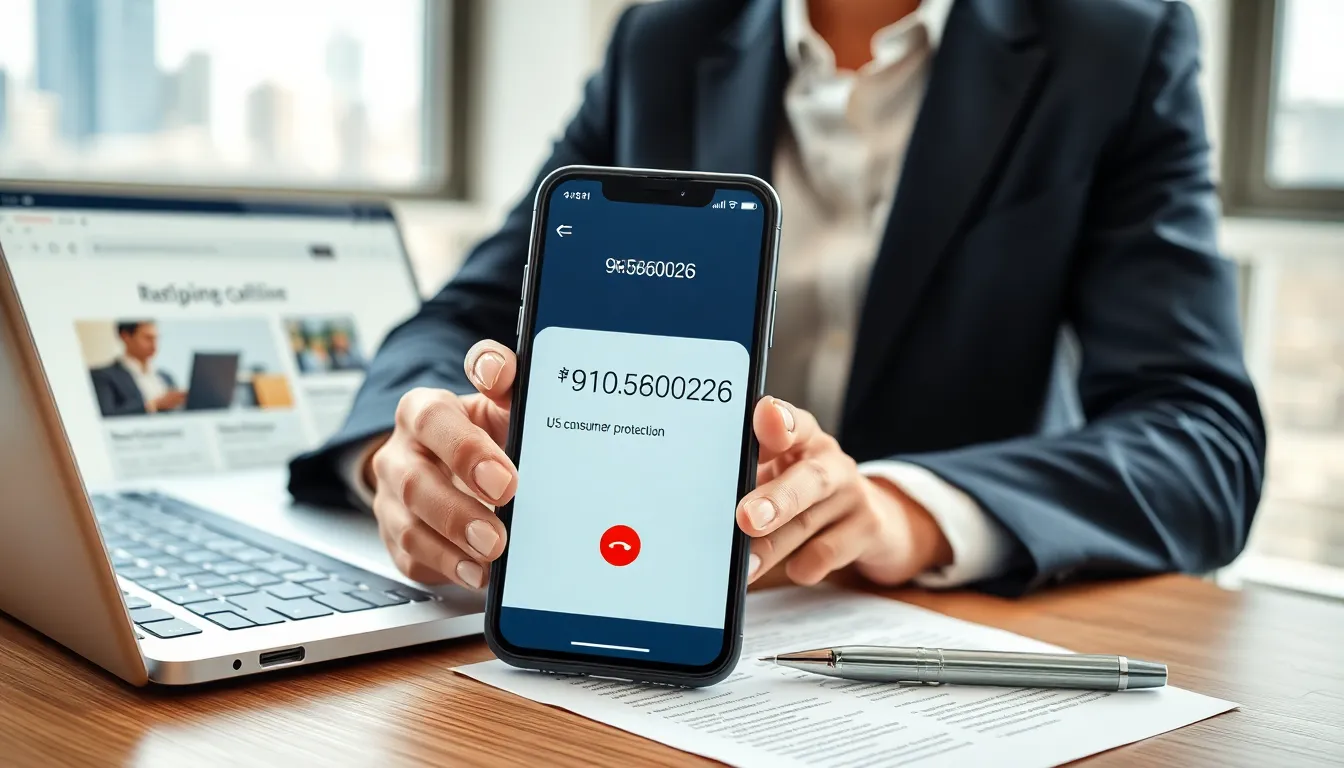
910560026 appears on phones and call logs. The reader sees the number and asks what it is. This article gives clear answers. It explains legitimacy, risks, and actions the reader can take. The reader learns how to block, report, or trace the number. The reader also finds quick troubleshooting steps and alternatives.
Table of Contents
ToggleKey Takeaways
- 910560026 can be legitimate or a spoofed scam number, so treat unknown calls cautiously and collect call time, message content, and any request for money or personal data before responding.
- Do not share financial or login details over the phone; verify any company or account claims independently and hang up if the caller pressures you or asks for immediate payment.
- Block 910560026 using your phone’s built-in block feature, enable carrier spam filters or third‑party call‑blocking apps, and forward suspicious texts to your carrier’s spam-report code.
- Report repeated or threatening calls from 910560026 to your carrier and to authorities (FTC, FCC, or local law enforcement) and keep call logs, voicemails, and messages as evidence.
- Perform a reverse lookup across reputable services and community forums, enable two‑factor authentication, and consider a secondary phone number to reduce future exposure.
What Is 910560026?
910560026 is a ten-digit number that can appear as a caller ID, text sender, or missed call entry. Many people see this number after a short ring, a voicemail, or a text message. The number may belong to a business, a telemarketer, a scammer, or an automated system. A phone network or spoofing tool can show 910560026 even when the caller uses a different line. The reader should treat unknown calls like this with caution. They should gather basic details before they reply. Those details include the time of the call, the content of any message, and whether the call asked for money or personal data.
Is 910560026 Legitimate Or A Scam?
910560026 can be legitimate or it can be a scam. Some legitimate businesses use similar numbers for customer outreach. Scammers often use number spoofing to hide their origin. The reader should look for warning signs. A call that asks for immediate payment is a red flag. A message that asks for a Social Security number or banking details is a red flag. A persistent caller who blocks callback attempts is suspicious. The reader can check the number online and on community forums to see reports from other people. If multiple reports call the number a scam, the reader should assume it is unsafe. If the caller provides verifiable account details or a known company name, the reader can verify that information independently. The reader should never give financial or login information over the phone unless they called a verified number first.
How To Handle Calls Or Messages From 910560026
The reader should follow clear steps when 910560026 appears on the phone. The reader should not answer unknown numbers if they want to avoid risk. If they answer, they should not share personal data. The reader should ask for the caller’s name, company, and a callback number. The reader should write down any claim number or reference the caller gives. The reader should hang up if the caller pressures them. The reader should resist offers that sound too good to be true. The reader should not press numbers in automated menus that request personal data. If the caller leaves a voicemail, the reader should listen to it for details. The reader should treat links or attachments from the number as suspicious. The reader should not click links or download files unless they confirm the sender.
How To Block, Report, Or Trace 910560026
The reader can block 910560026 using built-in phone features. On most smartphones, the reader can open the recent calls list, tap the number, and select block. The reader can add the number to a block list or set the phone to silence unknown callers. The reader can report 910560026 to their carrier. Most carriers accept spam reports via a text short code or an online form. The reader can forward suspicious texts to the carrier spam-report code. The reader can also report the number to government consumer-protection agencies. In the United States, the reader can file a report with the Federal Trade Commission. The reader can file a complaint with the Federal Communications Commission when the call involves illegal robocalls. The reader can report the number to online scam-tracking sites and community forums. These reports help other people. To trace 910560026, the reader can request call detail records from their carrier. The carrier can show the call origin and routing for the reader’s account. The reader should expect privacy rules and possible fees. If the reader faces threats or financial loss, they should contact local law enforcement and give them the call records and messages.
Troubleshooting And Alternatives
When 910560026 causes repeated interruptions, the reader can try quick checks first. The reader can update phone software and install carrier spam filters. The reader can use third-party call-blocking apps that maintain large spam lists. The reader can change voicemail settings to screen calls. The reader can enable two-factor authentication on financial and email accounts after suspicious contact. The reader can freeze credit reports if they fear identity theft. The reader can also consider using a secondary number for online forms and sign-ups. This step keeps the primary number private and reduces exposure.
Quick Steps To Perform A Reverse Lookup
The reader can perform a reverse lookup to learn more about 910560026. The reader should enter the number into a reputable reverse-lookup service. The reader should compare results across multiple services. The reader should read user comments on community report sites. The reader should check the number on social media, since businesses sometimes list numbers there. The reader should treat paid lookup results as imperfect. These services may not show spoofed origins.
When To Contact Your Carrier Or Authorities
The reader should contact the carrier when calls from 910560026 continue after blocking. The carrier can apply network-level filters. The reader should contact law enforcement when the caller threatens harm or causes financial loss. The reader should bring call logs, voicemails, and any written messages as evidence. The reader should contact credit bureaus and freeze credit if they gave financial data. The reader should follow any agency instructions and keep copies of all reports.