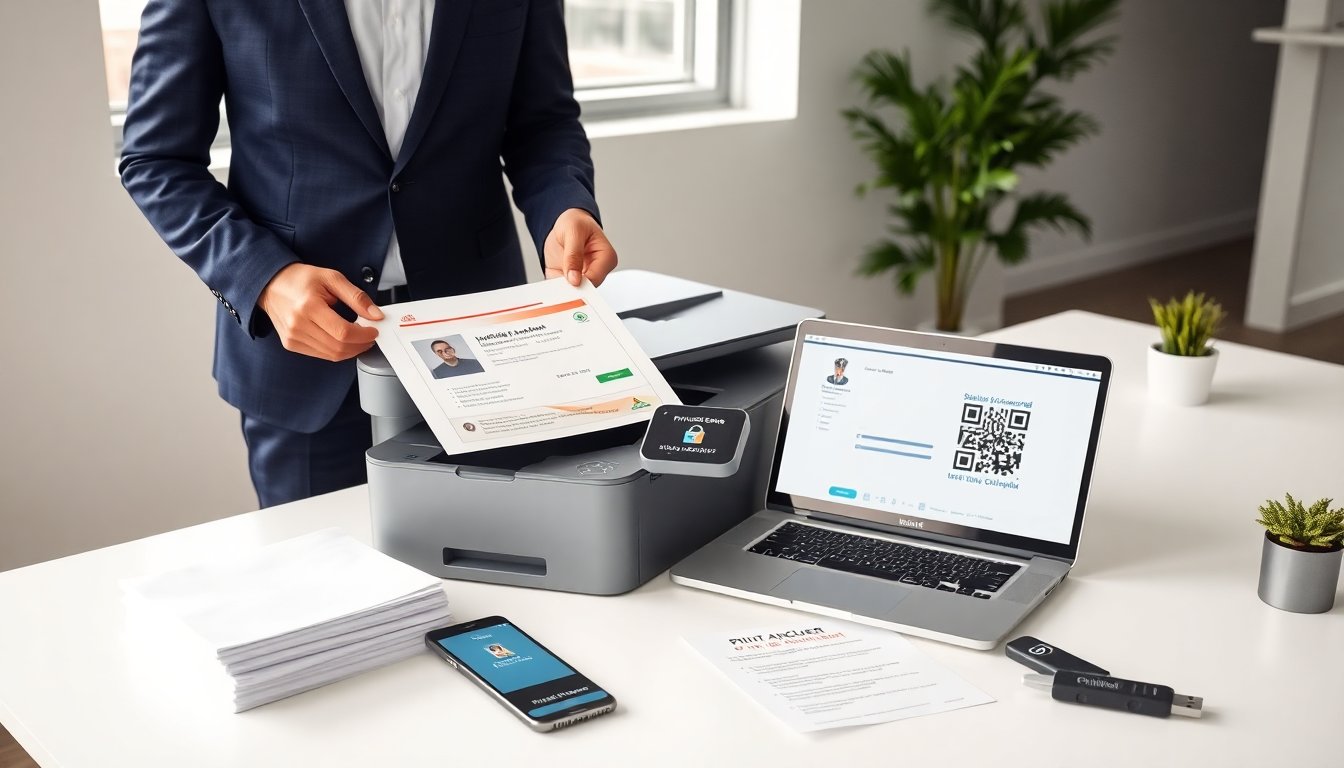
The guide explains how to print an eAadhaar and use it safely. The term eadharprint appears here to match search intent. The guide lists steps, tools, and security checks. The reader will learn how to download the file, verify the QR code, and create a valid printed copy.
Table of Contents
ToggleKey Takeaways
- eAadhaar is an electronic Aadhaar copy accepted for identity and address proof, and a printed eAadhaar is needed when a physical document or offline verification is required.
- Download eAadhaar securely only from the official UIDAI website using a trusted device and private network to protect personal data.
- Verify the eAadhaar PDF by checking details and scanning the QR code with an official app to confirm authenticity before printing.
- Print eAadhaar on plain white A4 paper at 100% scale using color if a photo is required, and sign and date the printout if requested by the official.
- Always keep printed and digital copies secure, mask the Aadhaar number when possible, and shred unneeded documents to prevent data exposure.
What Is eAadhaar And When You Should Use A Printed Copy
eAadhaar is an electronic copy of the Aadhaar letter issued by UIDAI. Many services accept a printed eAadhaar as proof of identity and address. Citizens use eAadhaar for bank KYC, mobile SIM verification, and government forms. Institutions often require a physical paper copy when they cannot verify the QR code on a screen.
They should prefer a printed eAadhaar in three cases. First, when an official asks for a signed physical document. Second, when the verifier lacks a QR scanner or reliable internet. Third, when a paper copy must be retained for records.
The printed eAadhaar contains the holder’s name, Aadhaar number, masked number option, photograph, and a secure QR code. The QR code proves authenticity when scanned against UIDAI data. The printout also shows the document’s issuance date and digital signature.
Users must avoid printing from public or unsecured computers. They must not share the full Aadhaar number publicly. They must use the masked number option when an agency accepts it. They must check the print for clarity and completeness before submitting it to an office.
Step-By-Step Guide To Downloading And Printing eAadhaar Securely
Step 1: Prepare the device and network. The user should use a personal computer or trusted device. The user should connect to a private network. The user should update the browser to the latest version.
Step 2: Visit the official UIDAI site. The user should open the UIDAI eAadhaar page on the official site. The user should avoid third-party download portals. The user should confirm the site’s SSL padlock and domain.
Step 3: Enter required details. The user should type their Aadhaar number, enrollment ID, or VID. The user should enter the correct name and captcha. The user should select the masked option if desired.
Step 4: Authenticate and download. The site will ask for an OTP sent to the registered mobile. The user should enter the OTP. The site will generate a password-protected PDF. The user should download the PDF to a secure folder.
Step 5: Open the PDF and enter the password. The PDF password uses the holder’s date of birth in DDMMYYYY format or the first four letters of the name and year. The user should follow the prompt and open the file.
Step 6: Verify the PDF details. The user should confirm the name, photograph, and Aadhaar digits. The user should scan the QR code using an Aadhaar QR reader app. The app should validate the digital signature and display the record.
Step 7: Print the eAadhaar. The user should use a high-quality printer and plain white A4 paper. The user should set the print scale to 100%. The user should choose “Actual size” or “No scaling” in print settings. The user should print in color if the office asks for the photograph to be visible.
Step 8: Sign and date if required. The issuing office may ask for a signature and date on the printout. The user should sign in ink within the designated area. The user should not obscure the QR code or photograph.
Step 9: Store copies securely. The user should keep one original printed copy for official use. The user should keep a digital backup on an encrypted drive. The user should shred unneeded printouts that contain the full Aadhaar number.
Troubleshooting Common eAadhaar Print Issues And Quick Fixes
Issue: PDF will not open. Fix: The user should confirm the password format. The user should enter DDMMYYYY for date of birth or the first four letters of the name and year. The user should update the PDF reader and try again.
Issue: QR scan fails. Fix: The user should use the official Aadhaar QR reader app. The user should ensure the camera lens is clean and the environment has good light. The user should zoom the scan window and align the QR code.
Issue: Print cuts off edges. Fix: The user should set print scale to 100% or select “fit to page” only if the printer crops. The user should choose “portrait” and A4 paper size.
Issue: Blurry photograph on print. Fix: The user should select color printing and check printer ink levels. The user should increase print quality in printer preferences and print another copy.
Issue: OTP not received. Fix: The user should verify the registered mobile number with UIDAI. The user should check network signal and wait a few minutes. The user should request the OTP again rather than creating a new request immediately.
Issue: Printer not available. Fix: The user should print at home, work, or a trusted print shop. The user should avoid public kiosks with unknown security. The user should transfer the file via an encrypted USB drive if needed.
Issue: Institution rejects printed copy. Fix: The user should ask why the copy failed verification. The user should show the digital PDF and the QR validation on a phone. The user should request accepted document formats from the institution.
Issue: Full Aadhaar number exposure. Fix: The user should mask the Aadhaar number before printing when the agency accepts it. The user should redact printed copies not in active use and shred them when disposing.
If the user faces persistent problems, they should contact UIDAI support. They should avoid third-party services that offer conversion or printing for a fee. They should rely on the official process to keep data safe.